
Moving into a new office or refurbishing an existing workplace comes with a long list of decisions. Flooring, furniture, lighting, meeting rooms, IT… and somewhere along the way, signage often gets pushed towards the bottom of the list.
But signage can make a huge difference to how a new workplace looks, feels and functions. It helps visitors find their way, brings your brand into the environment and creates a professional first impression from the moment someone arrives.
So, if you’re planning a new office, here’s the signage you should be thinking about.
1. Start Outside
Your workplace experience begins before anyone walks through the door.
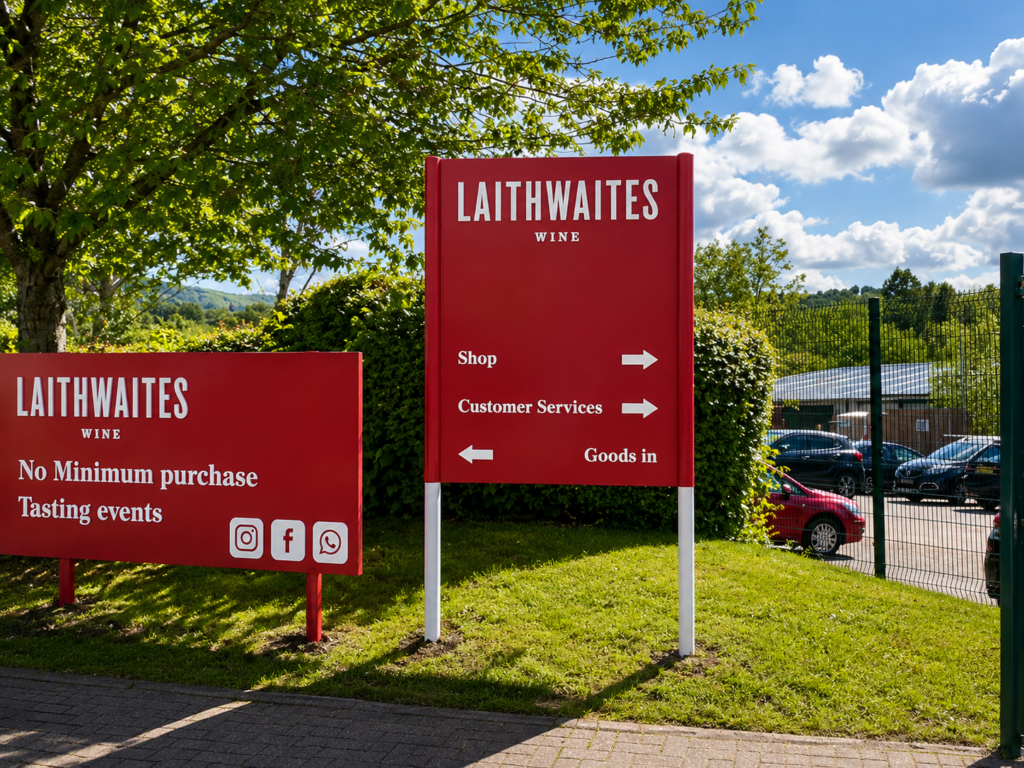
External building signage should make it immediately clear that visitors have arrived at the right place. Depending on your building, that could mean fabricated letters, an illuminated sign, a tray sign, projecting signage or branded entrance graphics.
If you share a business park or larger building, think about external wayfinding, car park signage and directional signs too. There’s little point creating a fantastic reception if visitors spend ten minutes driving around trying to find it.

2. Make Reception Count
Reception is where your brand gets its first real opportunity to make an impression.
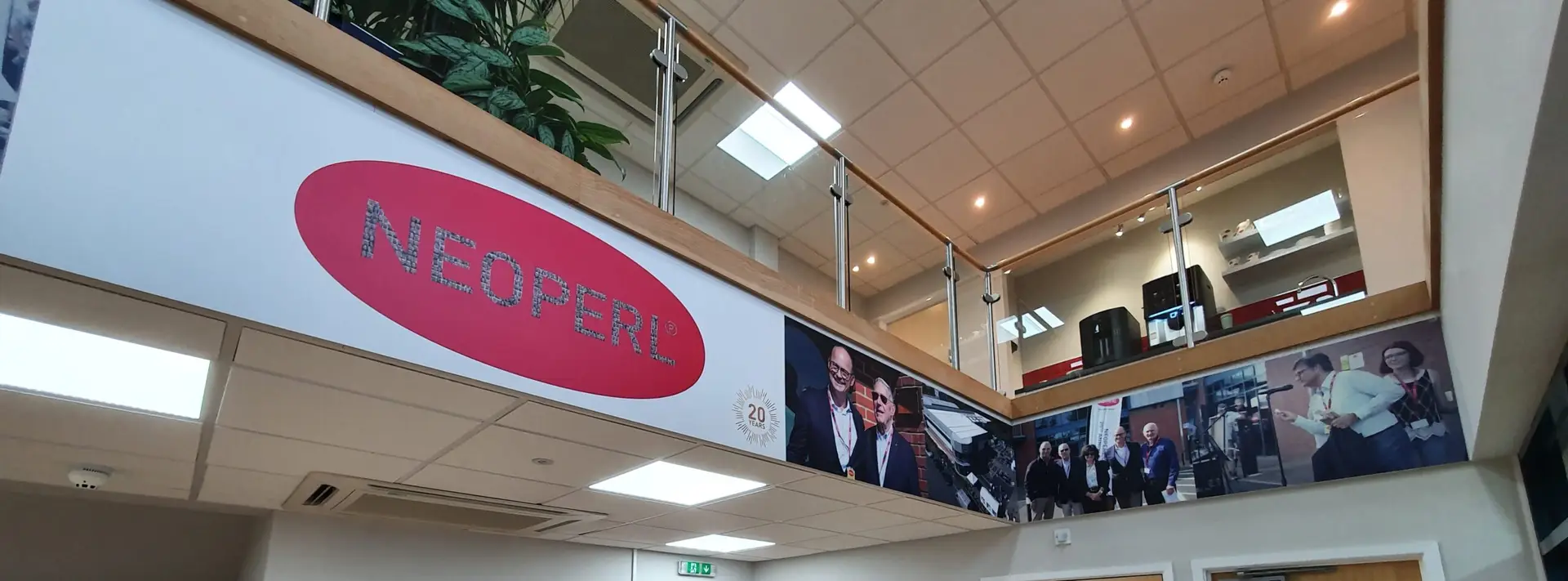
Acrylic logo signs, fabricated lettering, illuminated signage, wall graphics and feature displays can all turn a plain reception wall into something that feels distinctly yours.
Think beyond simply putting your logo behind the desk. Materials, lighting, scale and positioning can all be used to create a reception feature that complements the interior design and reflects the personality of your business.
3. Plan Your Wayfinding Early
Wayfinding is much easier to get right when it’s considered as part of the office design rather than added after everyone has moved in.
Walk through the visitor journey. Can someone find reception? Where do they go next? Are the meeting rooms obvious? Can they find the toilets, lifts and exits without asking someone?
Your internal wayfinding signage might include directories, directional signs, hanging signs, floor graphics and wall graphics.
One thing we’ve learnt is that businesses often plan signage from the perspective of people who already know the building. Try looking at the space through the eyes of someone visiting for the very first time.
4. Don’t Forget Door & Room Signs
They’re small, but you’ll probably need more of them than you think.
Meeting rooms, offices, breakout spaces, kitchens, toilets, storage areas and staff-only spaces may all require identification.
Acrylic door signs, vinyl graphics and interchangeable room signs can be designed as part of the wider signage scheme, creating consistency throughout the workplace rather than looking like functional labels added afterwards.
5. Think About Your Glass
Modern offices often contain a lot of glass – meeting rooms, partitions, doors and office pods.
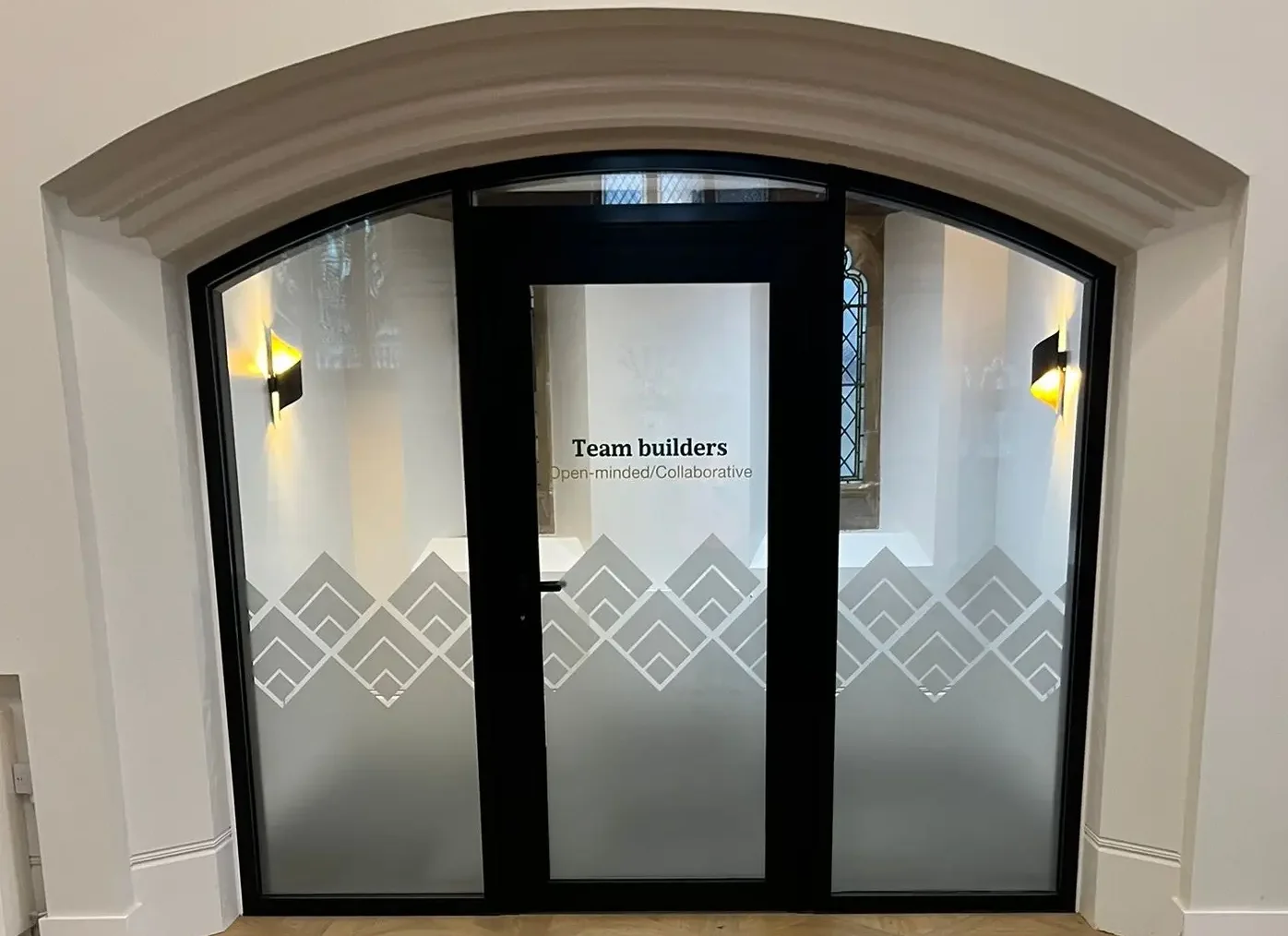
This creates another opportunity for branding, but there’s also a practical consideration. Window manifestations help make large areas of glazing visible while allowing you to incorporate your logo, brand pattern or bespoke graphics into the design.
Frosted vinyl can also provide additional privacy for meeting rooms without completely closing off the space.
6. Bring Your Walls to Life
Not every office sign needs to tell someone where to go.
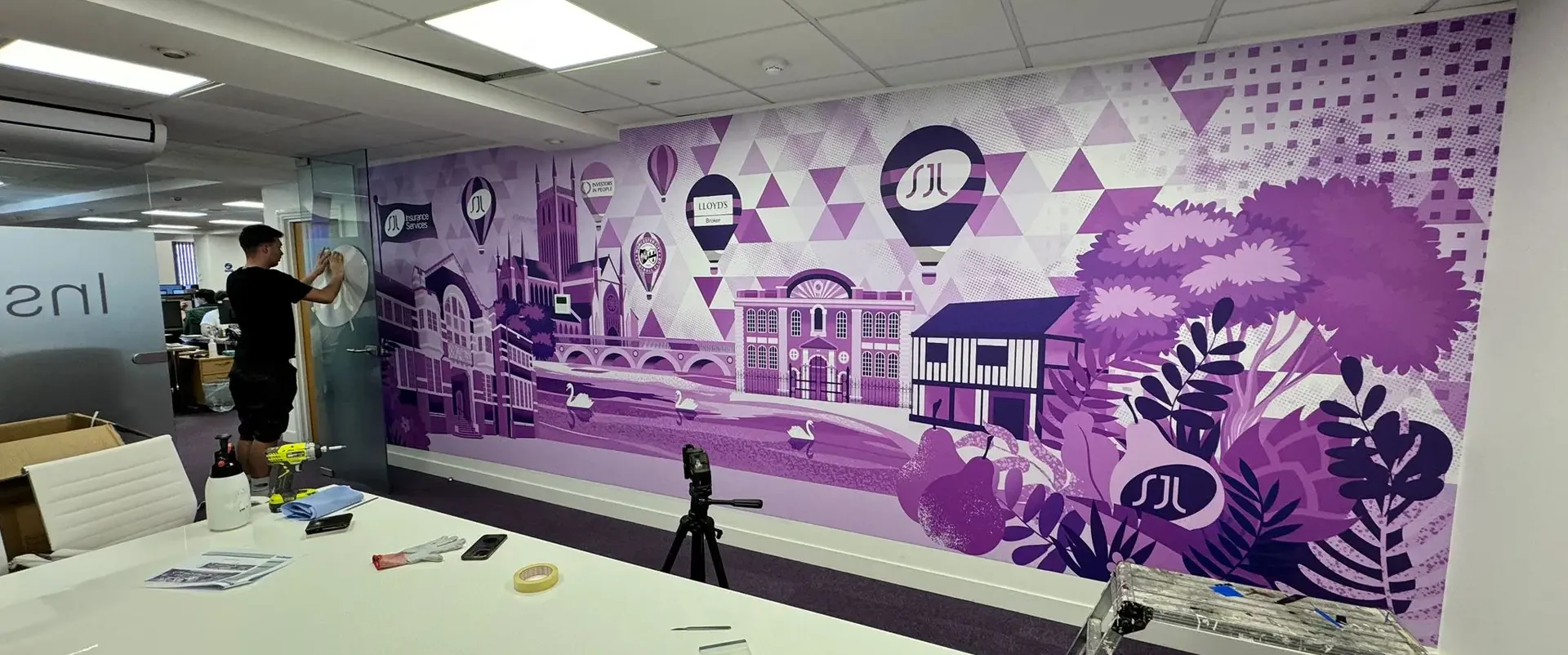
Wall graphics can bring colour, personality and storytelling into your workplace. Company values, timelines, photography, typography and large-scale branded graphics can turn blank walls into features.
They work particularly well in breakout areas, corridors, meeting rooms and collaborative spaces, helping your workplace feel more connected to your brand.
7. Consider Health & Safety
Some of the least exciting signs on your checklist are also some of the most important.
Fire exits, first aid points, emergency information, accessible facilities and other health & safety signage need to be considered alongside your branded signage.
Planning these early means they can be positioned correctly and, where appropriate, incorporated into the wider signage scheme without compromising clarity or compliance.
8. Think About Visitors- Not Just Employees
Employees quickly learn where everything is. Visitors don’t.
Consider the entire journey from the car park to the meeting room. Welcome signage, directories, visitor information, wayfinding and room identification can make arriving at an unfamiliar workplace much easier.
Good office signage should give visitors confidence that they’re in the right place without requiring someone to guide them every step of the way.
Your New Office Signage Checklist
Before opening the doors, consider:
- External Building Signage
- Reception & Logo Signage
- Illuminated Signage
- Internal & External Wayfinding
- Directories
- Door & Meeting Room Signs
- Branded Wallpapers
- Window Manifestation
- Wall Graphics
- Floor Graphics
- Hanging Signs
- Car Park Signage
- Health & Safety Signage
- Visitor Information
You won’t necessarily need everything on the list, but considering each area early will help you create a workplace that feels complete from day one.